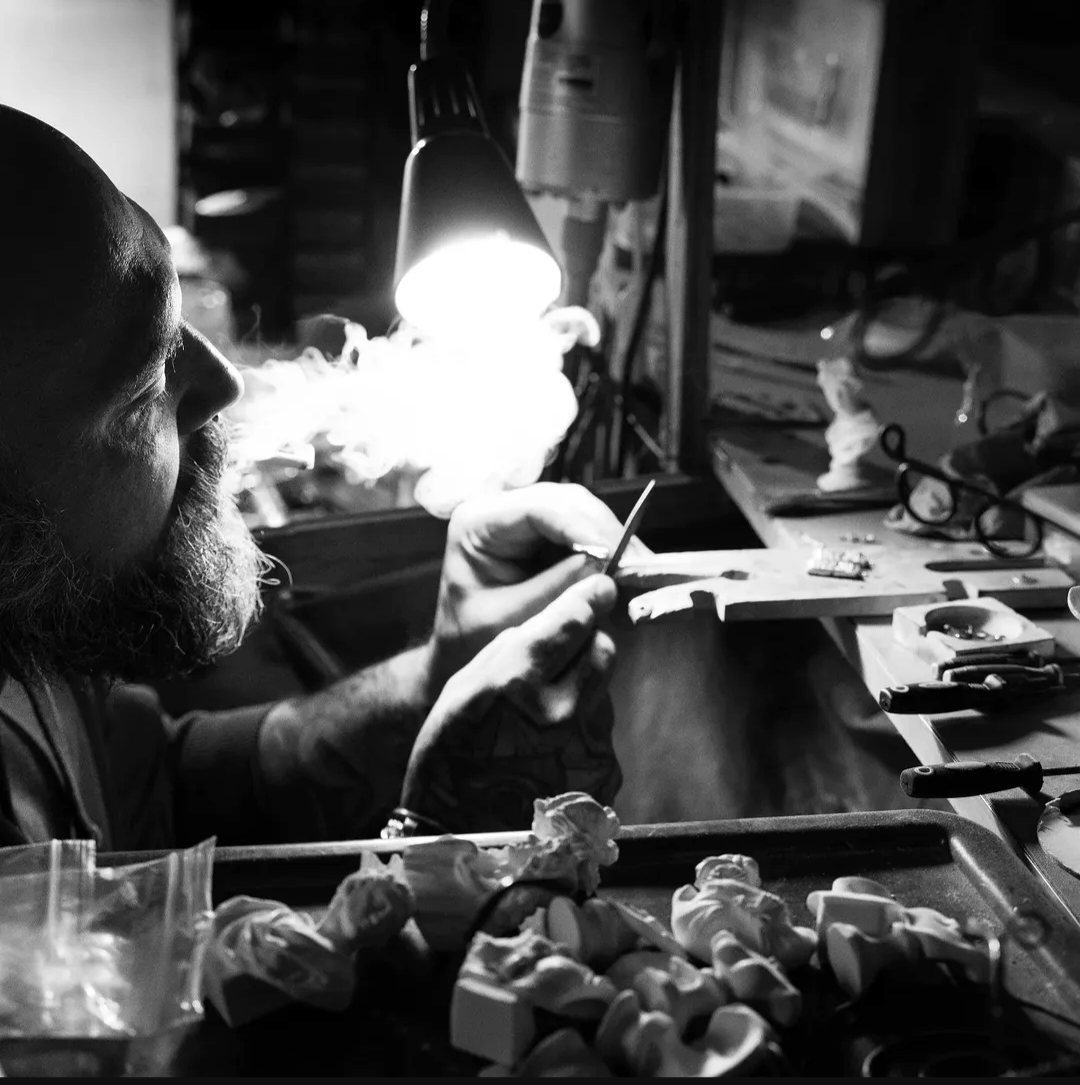
The making is the least visible part of a piece and the longest. It happens in heat and dust, under a single lamp, mostly late at night when the city is quiet and the hands stop shaking from the day.
Journal 03 · Process
The making is the least visible part of a piece and the longest. It happens in heat and dust, under a single lamp, mostly late at night when the city is quiet and the hands stop shaking from the day.
Silver behaves like a material with memory. Heated, it softens and accepts a shape. Worked cold, it hardens and starts to resist; push it too far and it cracks. The rhythm of the bench is the rhythm of that resistance — heat, shape, refusal, heat again. You learn to listen for the moment the metal has had enough, the slight change in sound and feel that says: stop, let me rest, then try again.
This is why a hand-made piece never looks like a machined one. Every surface carries the trace of a decision: where to push, where to stop, which mark to keep. A machine removes all of those decisions. We keep them.
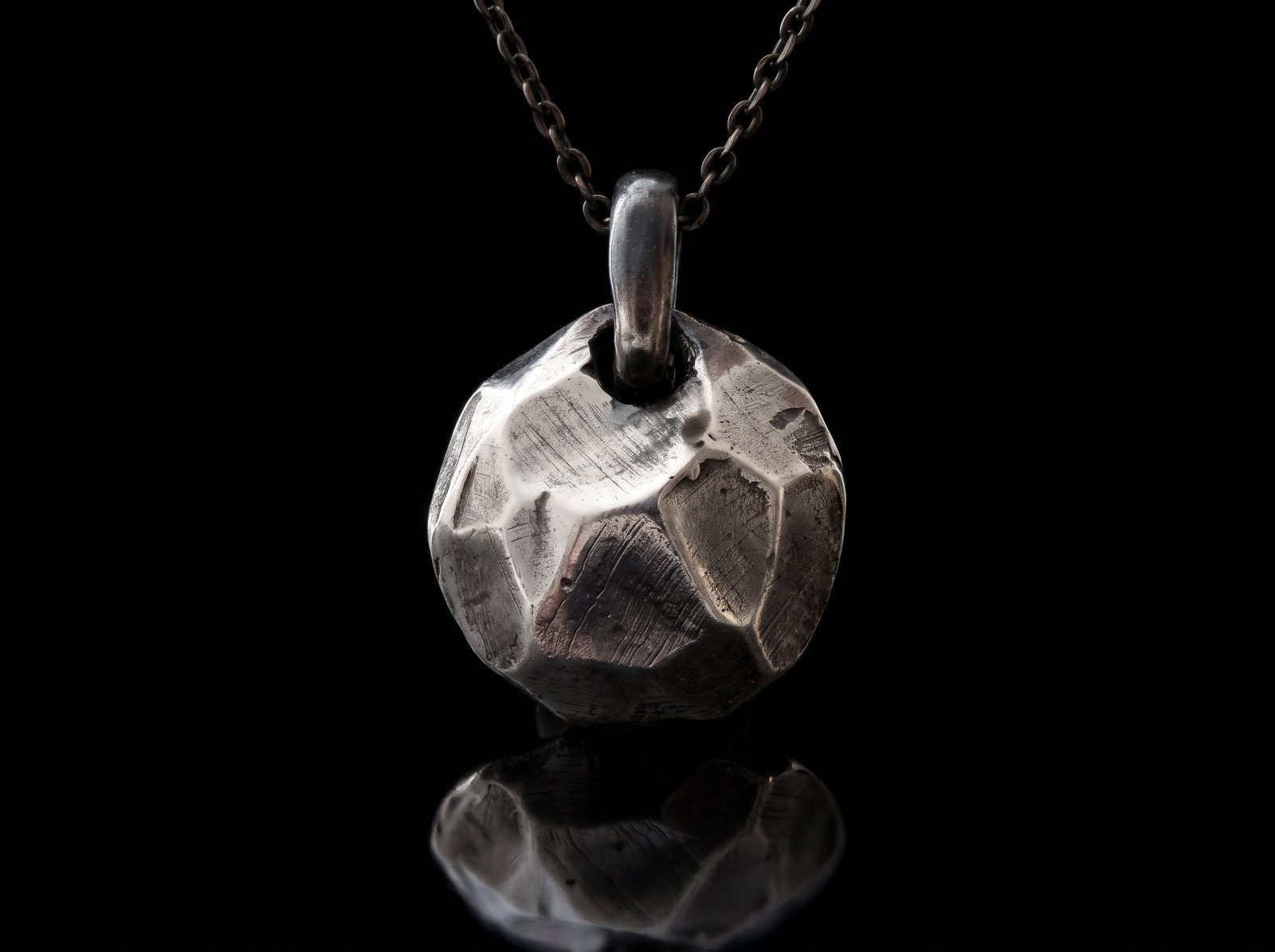 Plate — Stone
Most of the work is not the fire. It is what comes after. Files of different shapes, abrasives from coarse to fine, a burnisher, and the patience to remove almost nothing for an hour. A surface is not finished when it is smooth. It is finished when every mark left on it is a mark that was chosen.
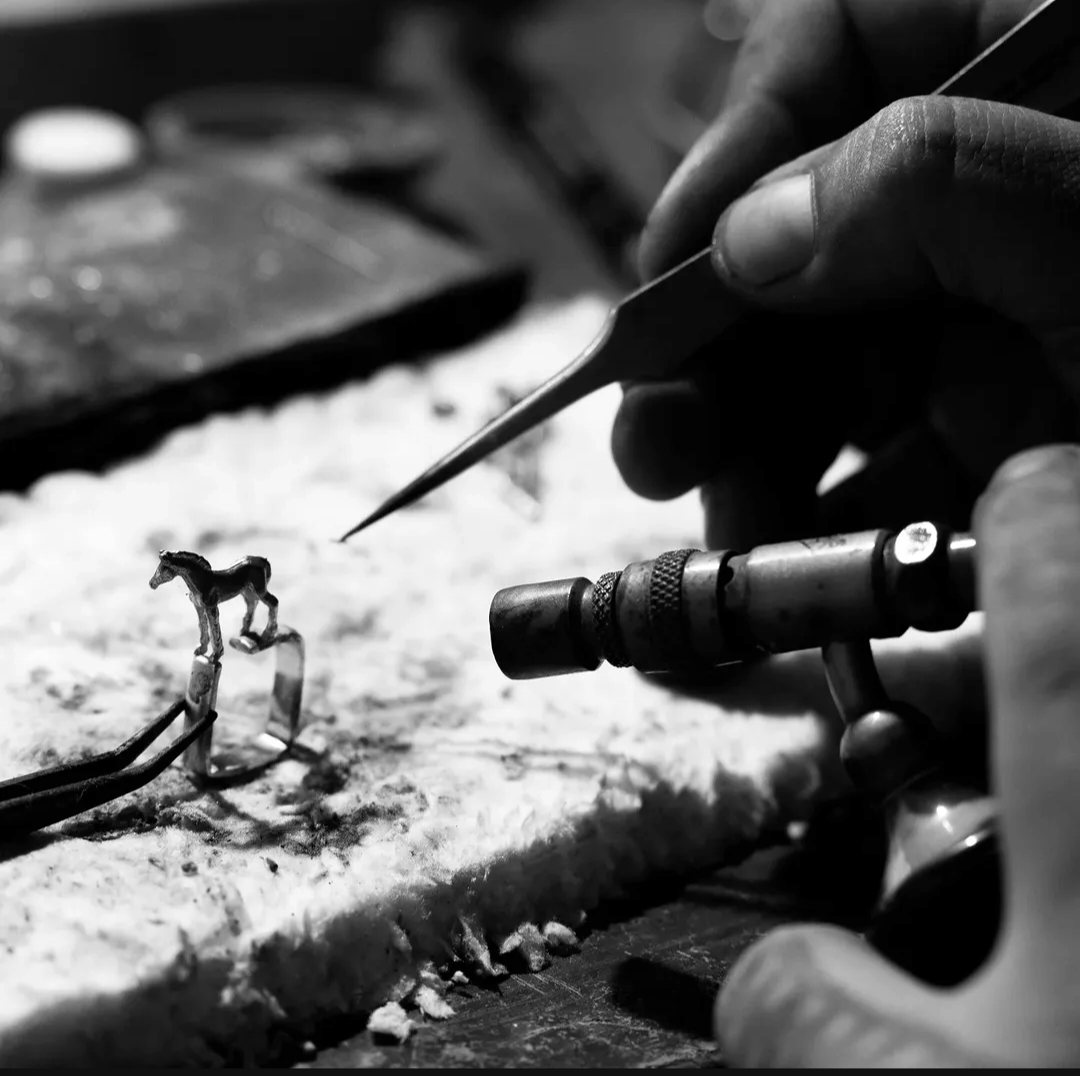
Small figures are the hardest. A seated man on a chair the size of a fingernail has hands, knees, a hat, a back that has to slump in the right way. Here the work moves to tweezers, fine points and the lens. One wrong movement and an arm is gone. The hands have to be slower than the thoughts.
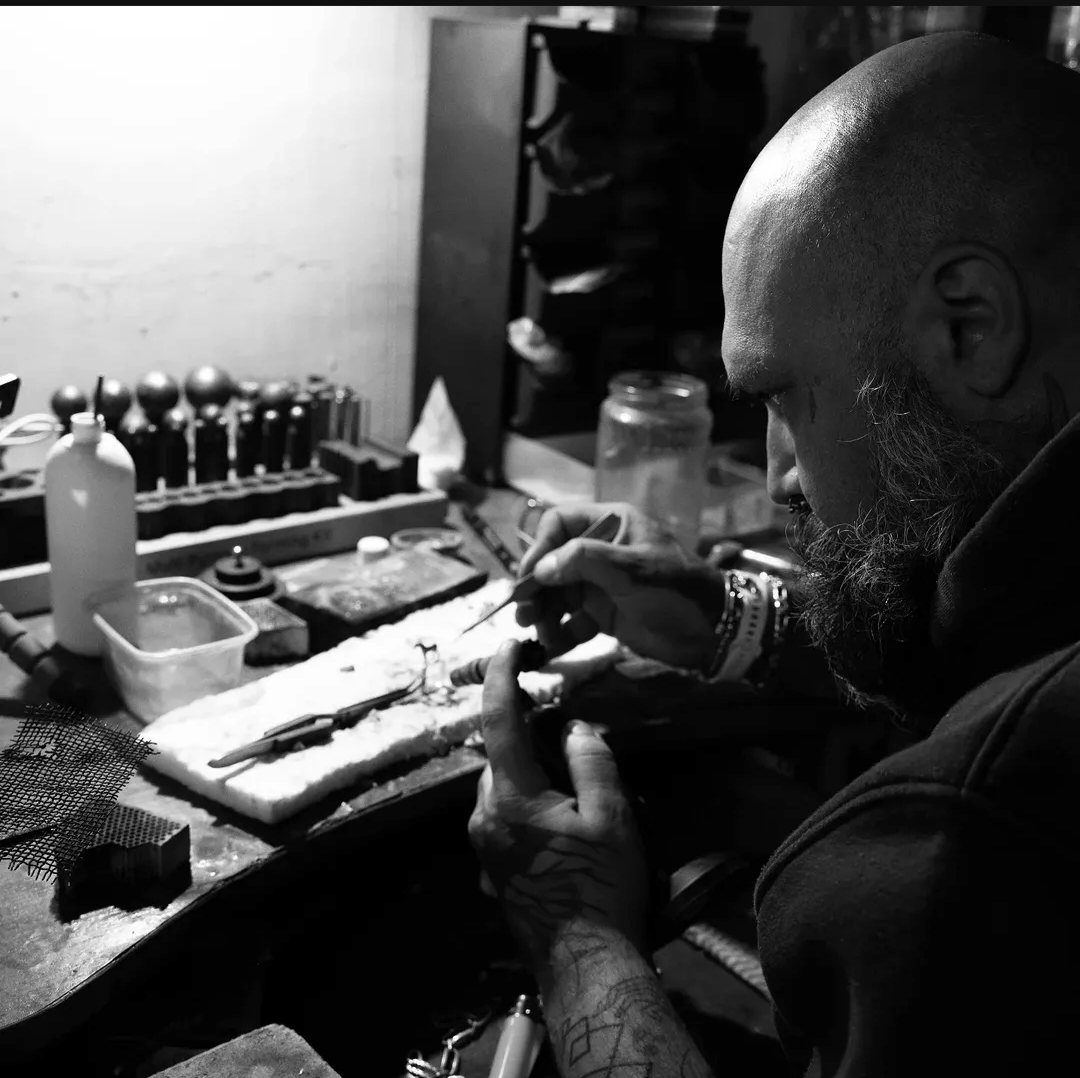
There is a rule at our bench: nothing is finished on the day it is made. The piece is put down and looked at again the next morning, when the eye is rested and honest. Things that looked strong at night often look clumsy in daylight, and small details that seemed unimportant suddenly carry the whole piece. Many pieces go back under the file. Some never leave the drawer.
The last step is darkness. The whole piece turns black, every hollow and every edge. Then light is brought back by hand, only to the surfaces that deserve it. What you see in the end is a drawing made of shadow — the same way a sculptor reads a figure by turning it slowly under one source of light, or a painter builds a face out of dark and light.
Then the piece leaves the bench and the most important part of its life begins: being worn. Skin, cloth and time will keep working on it long after we have let it go.
People sometimes ask why a small pendant takes days. The honest answer is that the hands are only half of the work. The other half is looking: turning the piece under the lamp, holding it at arm's length, putting it on the skin to see how it hangs, how the light hits it when someone breathes. A piece can be technically finished in an afternoon and still be wrong. The days go into making it right.
There is also the decision not to repeat. Even when a design is made more than once, each piece is finished by hand and each one ends slightly differently: a deeper shadow here, a softer edge there. We do not try to erase those differences. They are the proof that a person, not a process, made the object you are holding.
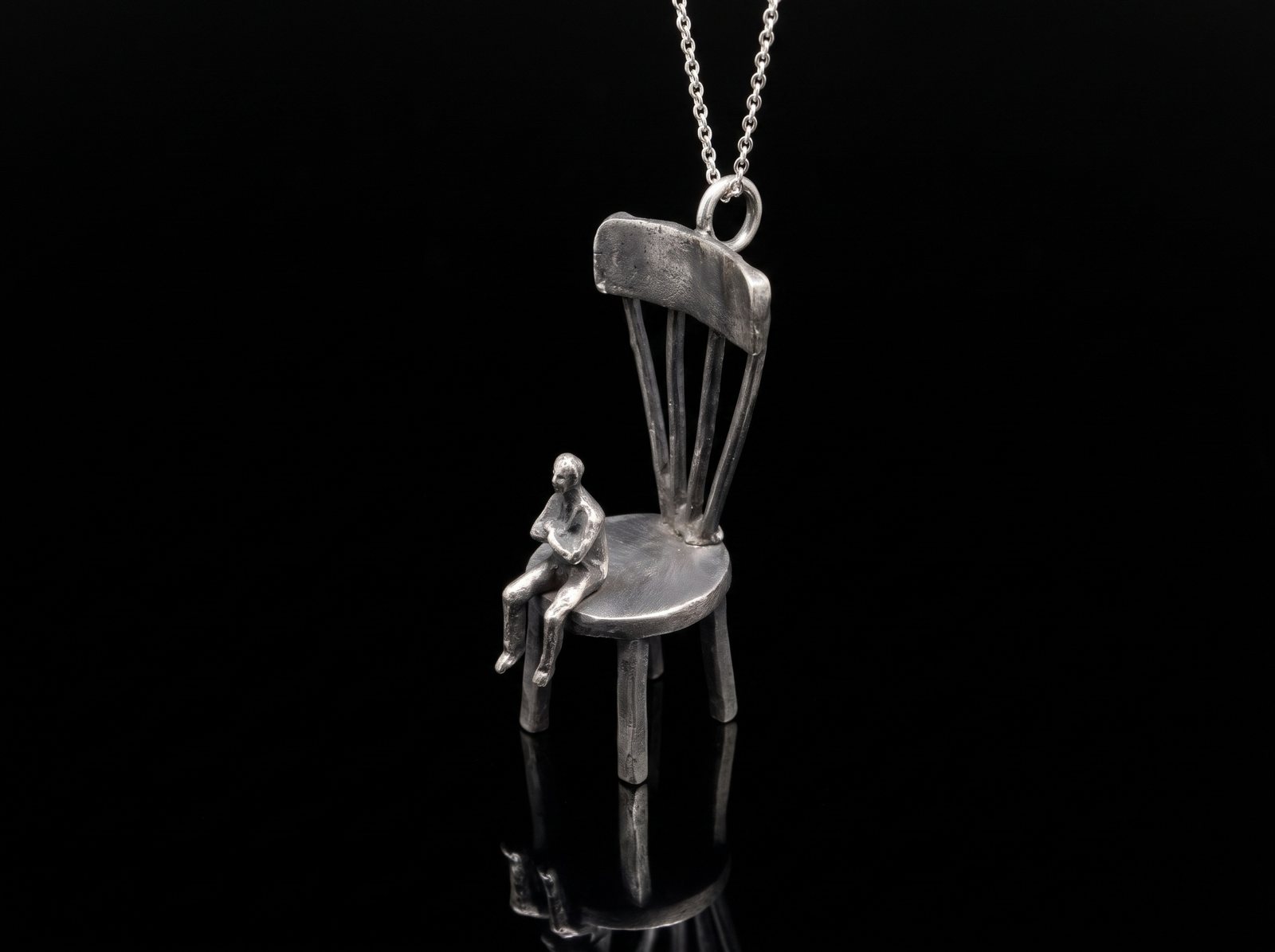 Plate — The WaitingAll stories →