Journal 04 · Material
Why we let silver darken
Polished silver is a mirror. It shows the room, the window, the lamp, the face of the person holding it — everything except its own form. A highly polished sculpture can be almost impossible to read: the eye slides over it and sees only reflections. Shine is a way of disappearing.
What darkening does
Silver reacts with the air. Over time it turns grey, then deep brown, then almost black — the same slow process that blackens old cutlery and church silver. Most jewellery is designed to hide this; it is polished, coated and sold as if time did not exist. We do the opposite. We darken every piece on purpose, and then we decide where the light comes back.
The black settles into every depression; the high points are brought back to bright silver. Suddenly the eye can read the volume: the ridge of a nose, the curve of a hip, the facets of a stone. It is the same principle painters and sculptors have used for centuries — light and dark, chiaroscuro — to make form visible. Here it is not decoration. It is how the shape becomes readable at all.
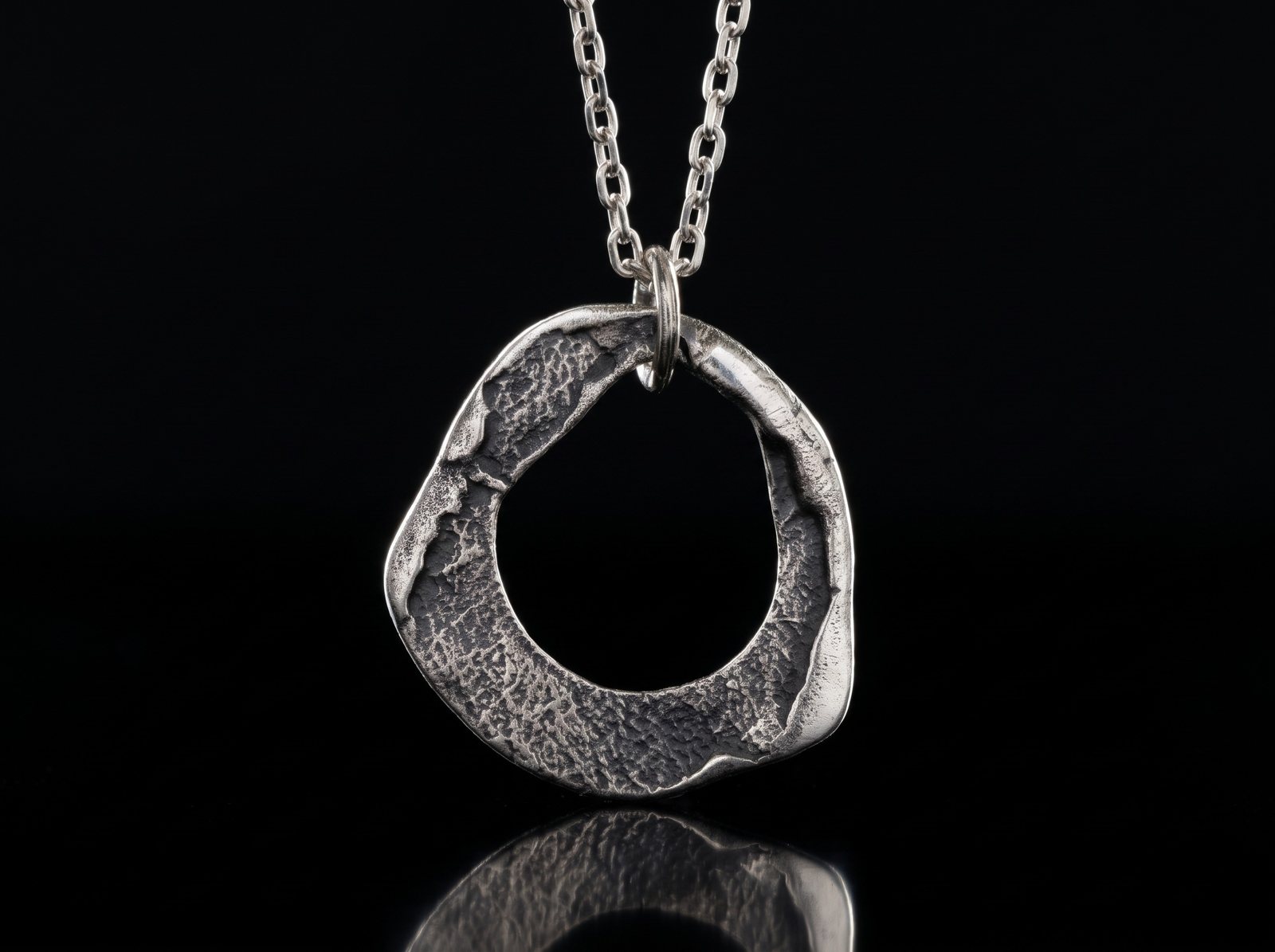 Plate — Open Circle
The work the wearer finishes
The darkening is not the end. It is a beginning. Every day a piece is worn, skin and cloth rub its high points a little brighter, while the hollows stay deep. In a few months, a pendant will have a light pattern no one designed: brighter where it touches the collarbone, darker where it hangs free.
There are bronze statues in old cities whose feet or hands shine like gold, while the rest of the figure is dark brown. Millions of people touched them for luck, and every touch removed a little darkness. A worn piece of silver follows the same law, only privately. It keeps drawing itself, slowly, in the shape of the life that carries it.
No two pieces age the same way, because no two lives do.Caring without erasing
If a piece becomes too bright, it can be darkened again; if it becomes too dark, the high points can be brought back with a soft cloth. We do not recommend dipping or harsh polishing, which strips the whole surface and turns the piece back into a mirror. The goal is not to make it new. The goal is to keep it readable.
A dark piece of silver is not old. It is simply honest about time.
Silver as a material for sculpture
Silver has been used for objects of meaning for thousands of years: coins, cups for rituals, amulets, the small figures placed in temples and graves. It is soft enough to be shaped by hand and strong enough to survive centuries. Unlike gold, it does not stay the same. It reacts, changes colour, carries traces of where it has been. For a sculptor that is not a flaw. It is a material that tells the truth about time.
Sterling silver — 925 parts silver in every thousand — is hard enough to be worn every day and still soft enough to keep every mark of the hand. That balance is why we work only with it: the piece can live on a body for years and still look like it was made yesterday by someone who cared.
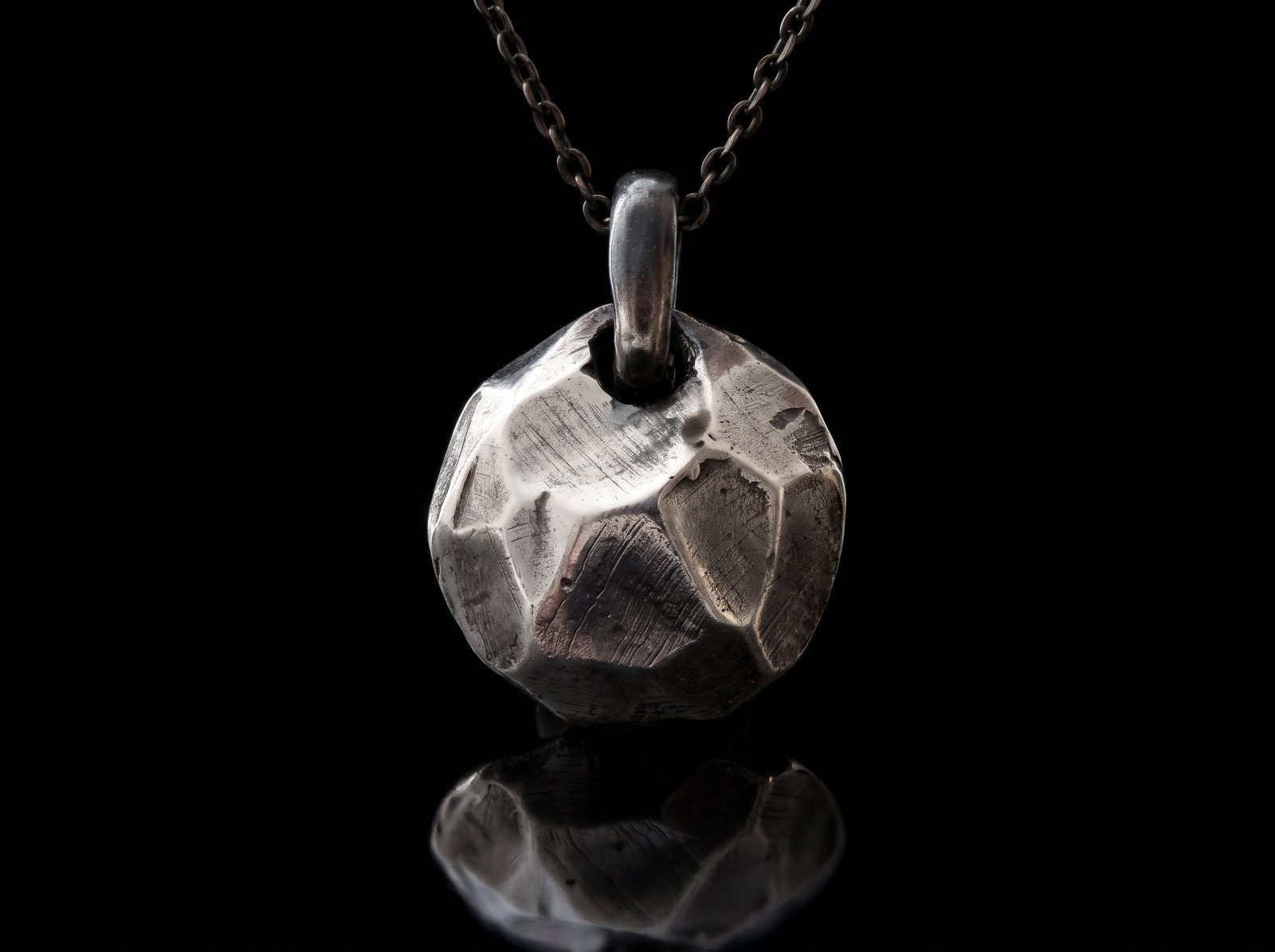 Plate — StoneAll stories →